Spain is famous for its dry cured pork products, the best known of these are serrano ham, chorizo, salchichón and lomo. Brindisa imports all of these as well as morcilla and panceta (or baicon).
The quality of the finished product relies on the quality of the ingredients; almost all of Brindisa’s suppliers of embutidos use only belly and shoulder meat in their salchichón and chorizo recipes, the two best cuts for moistness, and flavour.
Our glossary for Spanish cured meat:
Cured: means aged, the length of time that the product has had to dry.
Jamon ibérico: cured ham made from the meat of ibérico pigs.
Jamon serrano: cured ham made from the meat of white pigs.
Embutido: literally means stuffed but refers to charcuterie which is “stuffed” into casings such as chorizo, lomo, salchichon, morcon, morcilla etc.
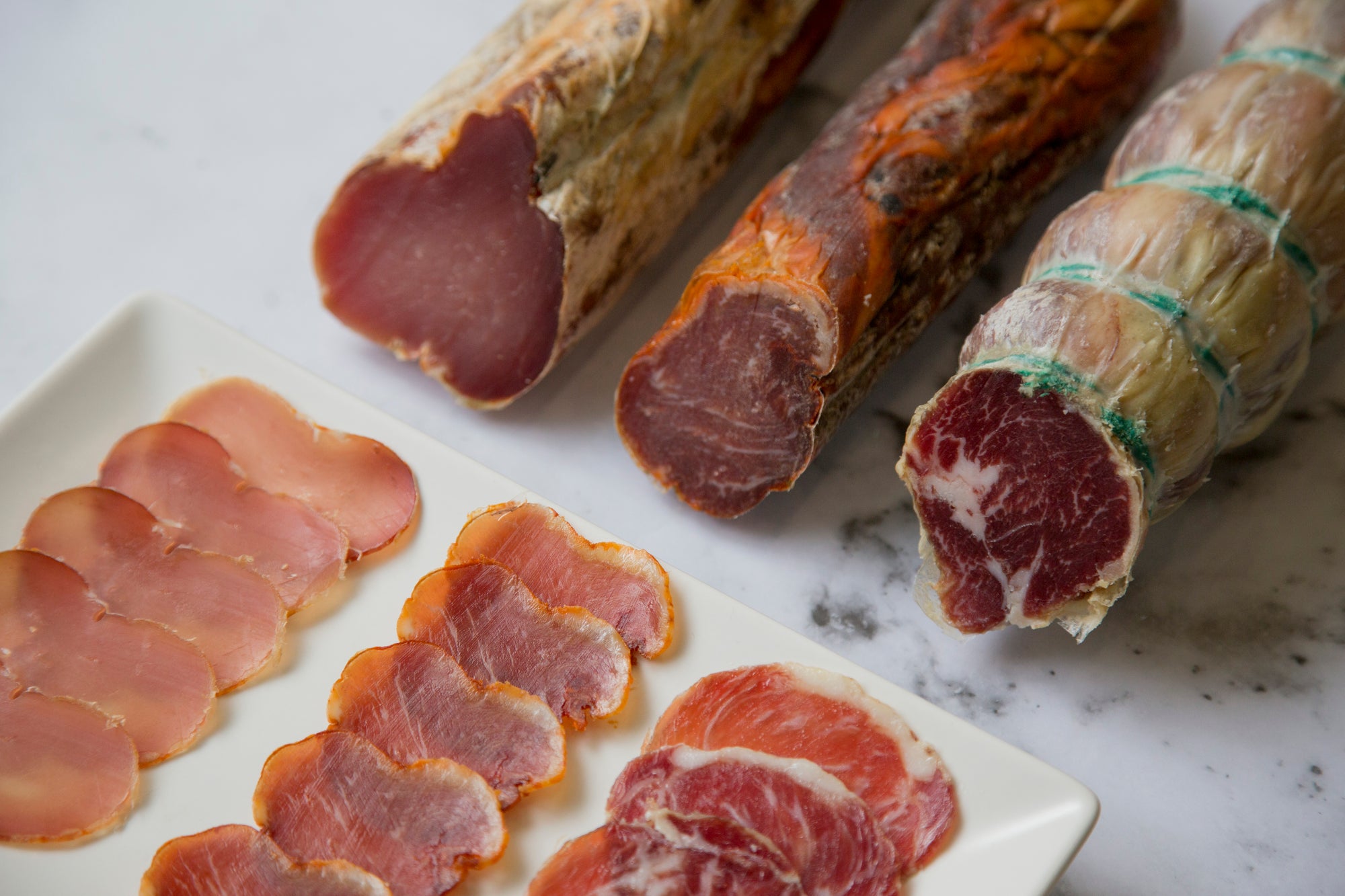
Lomo adobado: cured tenderloin, a muscle that runs down the back of the pig, often rubbed with paprika and garlic. May be made with ibérico or white pig meat.
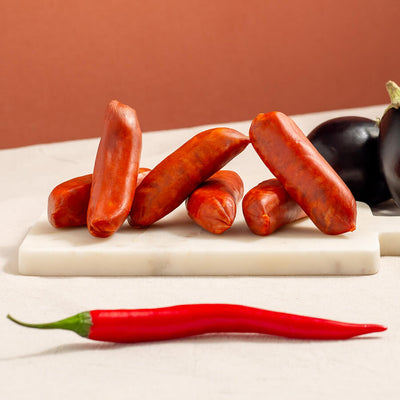
Chorizo: a cured pork sausage flavoured and coloured by smoked or unsmoked pimentón. May be made with ibérico or white pig meat.
Salchichón: a cured pork sausage generally seasoned only with salt and black pepper. May be made with ibérico or white pig meat.
Morcilla: black (blood) pudding which made be made in different styles in different areas: morcilla de Burgos contains rice, morcilla de Galicia contains raisins and pine nuts etc. they may be produced either cured or for cooking.
DOP: a Denominación de Origen Protegida may be created for a variety of food products (including cured hams). It specifies a number of stages in the production process that must be conformed with to be granted a DOP. For instance being produced in a specific region, or from particular raw materials or aged for a certain time.
Pimentón: paprika used to give chorizos their distinctive colour and flavour; it may be smoked (Pimentón de la Vera) or unsmoked.













 10 people
 30-40 mins