Before you begin: Take all refrigerated ingredients out of the fridge 1-2 hours before baking. Room temperature ingredients blend more smoothly and create a better texture.
Preheat your oven: Set to 220°C fan, or 240° conventional.
Prepare your tin: Line your springform tin with two overlapping sheets of parchment paper, pressing into the corners. The paper should come up above the sides of the tin by about 5cm.
Method
1. Weigh out the sugar and salt into a small bowl and mix together. Set aside.
2. Combine the cheeses: Add the full tub of Gredos goat’s curd and cream cheese to the bowl of your stand mixer fitted with the paddle attachment. Add the sugar and salt mixture.
Using a stand mixer: Beat on medium speed for 4-5 minutes until completely smooth and creamy, scraping down the sides of the bowl halfway through.
Mixing by hand: If you don’t have a stand mixer, use a large bowl and electric hand mixer, or a sturdy whisk. Beat vigorously for6-8 minutes until the mixture is completely smooth with no lumps. Your arm will get a workout, but it’s worth it!
3. Add the eggs one at a time: Crack in one egg and mix on low speed (or stir by hand) until just incorporated before adding the next. Scrape down the sides between additions. Don’t overmix– you want to avoid incorporating too much air.
4. Pour in the double cream: Add the cream and mix on low speed until just combined. If mixing by hand, fold gently with a spatula or whisk slowly until smooth.
5. Check the consistency: The batter should be thick and pourable, like double cream – not watery or lumpy. If you see lumps, gently whisk or strain through a sieve.
6. Pour into the prepared tin: Pour the batter into your lined springform tin. Give it a gentle tap on the counter to release any air bubbles.
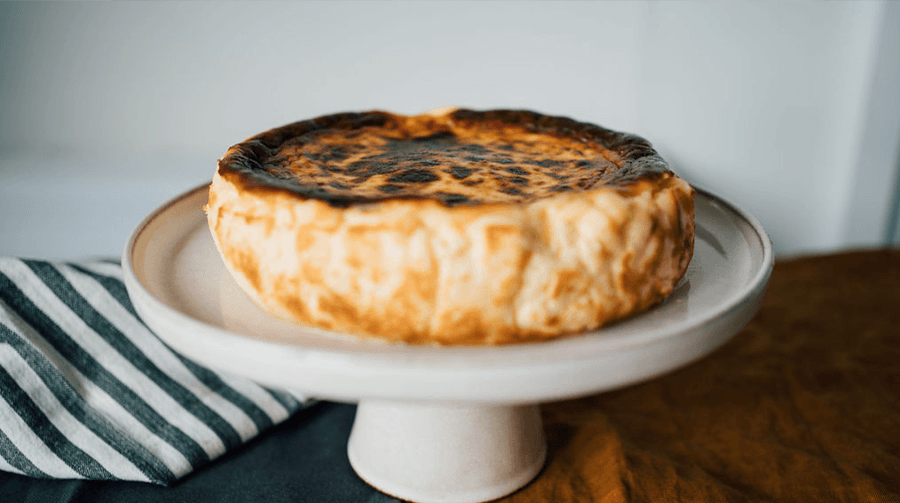
7. Bake for 30-35 minutes: The cheesecake is ready when the top is deeply golden brown(almost burnt-looking) and the cake has risen but still has a pronounced wobble in the centre when you gently shake the tin.
8. Cool completely: Remove the cheesecake from the oven and leave it to rest at room temperature for 3-4 hours. The centre will sink and settle. Once cooled, refrigerate for at least 4hours or overnight before serving.
Tips for Success
Don’t be afraid of the colour: A true Basque cheesecake should have a dark, almost burnt top. This caramelisation adds incredible flavour.
The wobble test: When done, the outer edge should be set but the centre should still jiggle like jelly. It will firm up as it cools.
If it browns too quickly:If the top is dark but the cake hasn’t risen, turn off the oven and leave the cake inside with the door closed for an extra10-15 minutes.
Serving: Best served at room temperature or slightly chilled. Remove from the fridge 30minutes before serving for the creamiest texture.
Storage: Keep refrigerated for up to 5 days. The flavour actually improves after a day or two!

















 2 people
 20 mins