We are here to help you select the right rice for your cooking!
It’s interesting to acknowledge that the world has at least 400,000 varieties of rice, and they are not the same, so here we want to explain how our 3 rices fit into this huge world of this incredible grain.
Rice is central to Spanish cooking, from the iconic paellas of Valencia to creamy, risotto-style dishes and comforting, broth-rich rice dishes served across the country.
Spain is the second-largest rice producer in the European Union, behind Italy. While the eastern Levant coast of Spain has the most famous rice-growing areas of Spain, rice is grown in many other regions, notably Andalucía, where volume is the driver. Together, Italy and Spain account for around 80% of total EU rice production. However, as rice feeds so many, it is a crop that is crossed and modified to be fast-growing and weatherproof, making it a commercial commodity.
At Brindisa, we focus on smaller areas of cultivation, seeking out varieties that offer us different advantages relating to flavour, texture and grain size. Spanish rice dishes are plentiful, but there is not a strict code as to which rice you use for which recipe or style of rice dish. What is important is to know what rice you have selected and how it will behave in the dish you choose to cook. All rice types from Spain are round and highly absorbent, and there are essentially 3 styles of cooking rice:
-
Dry rice dishes, such as the famous paella, where the stock is cooked off, and the rice isn’t stirred
-
Creamy, meloso-style dishes similar to risotto, where the stock is added as you cook and the rice is gently stirred so that the stock blends with the starch of the grain
-
Caldoso dishes, which are soupy rice dishes, where the stock is part of the dish, becoming the soup around the grain, and where immediate serving is crucial so as not to over-plump the grain.
So, going back to the grain and the name, we are keen to make sure that you are given real clarity in this blog, so you can buy armed with good information.
Calasparra and the Delta del Ebro are rice-growing regions, not types of rice, while Bomba and Bahía are rice varieties; Calasparra itself produces several different varieties.
Naming Guide
-
Regions: Calasparra, Murcia, and Delta del Ebro, Tarragona
-
Suppliers/Brands: Illa de Riu private rice estate and Cooperativa del Campo, a co-op of growers
-
Varietales: Bomba, Bahía and Balilla x Sollana.
We buy the varietal cross Balilla x Sollana from a cooperative in Calasparra, Murcia.
We buy the pure varietals Bomba and Bahía from the Illa de Riu private family estate in Delta del Ebro, Tarragona.
Let’s look at these origins and what makes them special:
Our rice from Calasparra was launched in export markets in the ’90s and is often mistaken for a rice type. It is, in fact, an area that grows wide varieties of rice: brown, Bomba and Balilla x Sollana. We buy Balilla x Sollana from Calasparra.
The fascinating origin of Calasparra
Calasparra is a village with a number of cooperatives that all provide a route to market for the growers. It was the first exporter of rice of origin and quality in the ’80s and ’90s. It is remarkably distinctive because of its white cloth bag and its red lettering and has been enjoyed and recognised abroad for over 30 years.
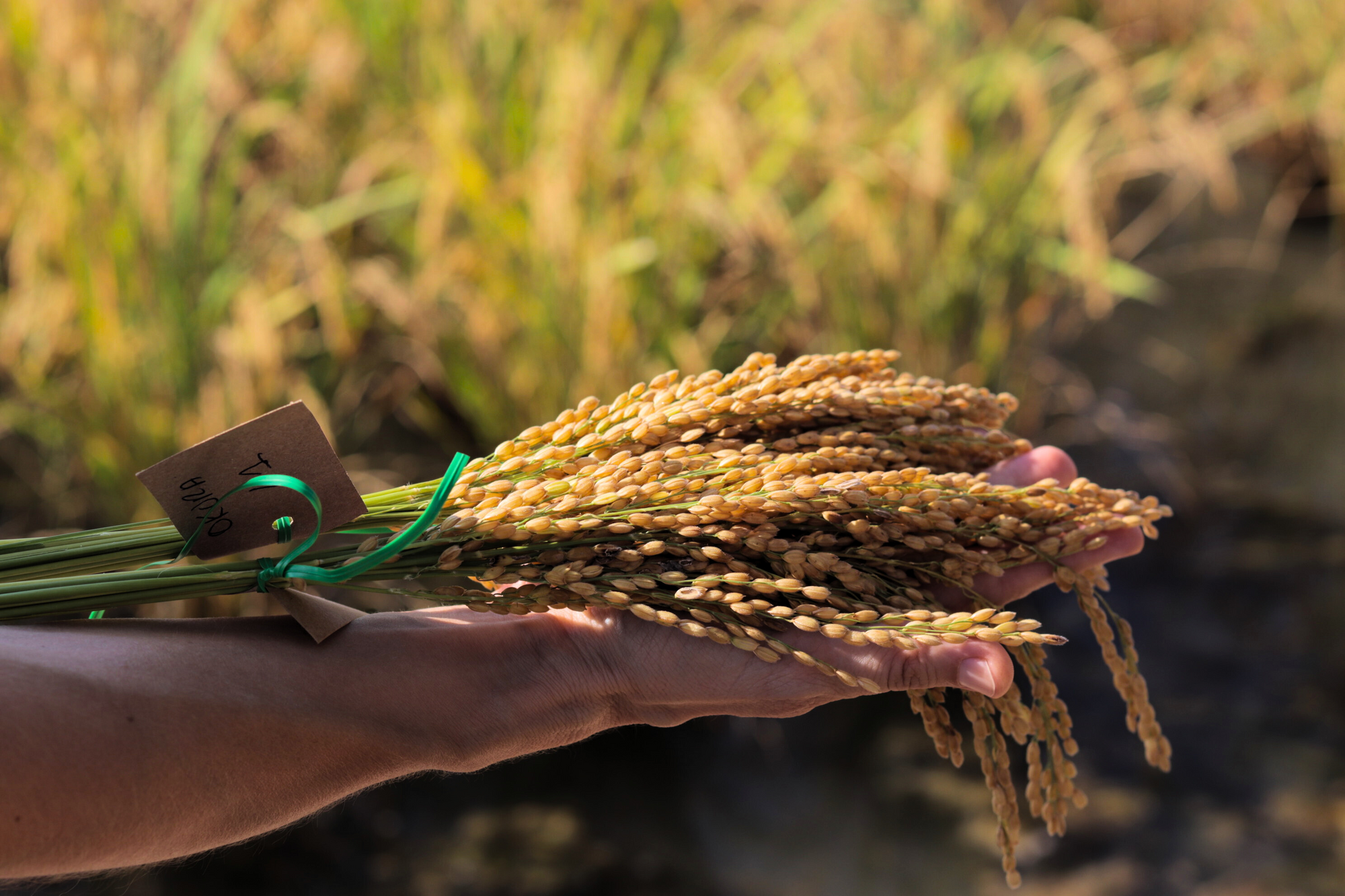
The inland region of Calasparra is unique, as 2 big rivers meet here, providing fantastic water from the mountains for the paddy fields. The exceptional irrigation channels, acequias, that regulate the watering of the paddy fields were designed by the Moors during the Al-Andalus period, making them 1,000 years old. This fascinating water system and the cooperatives’ rotation of crops across the plots, including fruit trees and cereals, encouraged us to stock this rice many years ago. The natural diversity in Calasparra is outstanding: wildflowers, bird and insect life abound, and the area is also protected by mountains that shelter the flat land where the crops and paddy fields are positioned.
But what about the Balilla x Sollana rice itself?
This Balilla x Sollana rice grain is round and generous in size. It is very versatile, but in our view, the grain responds most effectively to the dry rice, paella-style dishes, although you could use it for other styles too. We would recommend using it mainly for dry dishes, as, being a larger grain, it can release more starch than you may want if stirred in a meloso risotto, and in a soupy caldoso dish, you run the risk of over-plumping the rice grain. The grain is highly absorbent and will continue to soak up liquids, so be careful not to overcook it.
Delta del Ebro, Illa de Riu private rice estate

The Ebro River flows down to the sea, and the sea is in close proximity to the rice estate, which sits in the delta. This area has similar features to the famous Albufera of Valencia in that they are both near the coast and need to keep the fresh river water to feed the paddy fields and not the saline water from the sea. The waters are managed by irrigation channels that have been built and are run by the local “Comunitats de Regants”, which regulate the use of the water and control the distribution via a 700-km network of irrigation canals and drainage channels.
The varieties and strains selected and grown here are very high-quality single varietals only. The Trías del Romero family has run this estate for three generations since 1917. Juan Trías’s business is a certified selector of premium seeds for its crops. Its annual production is modest, around 2,800 tons a year, 50% of which is the prized Bomba varietal, but the quality is exceptional, and every grain in the bag will be a perfect grain.
Back in the early 2000s, we chose to work with Juan Trías and his family estate because, apart from the joy of getting to know experts and learning why they choose not to compromise for the sake of producing the very best that is possible, Illa de Riu offers us single-varietal rices grown on a private estate, where they set their own standards of excellence for everything from the seed selection to the drying of the grain.
At Brindisa, we select two varietals from his range: Bomba and Bahía.

Bomba: Often described as the “king of Spanish rice”, Bomba is a pearly, short-grain rice prized for its exceptional ability to absorb flavour. The grain itself is smaller than other grains. However, it can absorb up to three times its volume in stock or cooking liquid while retaining its shape. The grains remain beautifully separate rather than sticking together, making Bomba particularly forgiving and easy to work with. This Bomba rice from Illa de Riu has extraordinary shine, so that once cooked, it retains a true glow as the grains sit almost like pearls, coloured by the stock rather than fattened by the stock. It is the most elegant rice grain to the eye, and then, on eating, it combines its own elegant taste with the flavour of the stock in perfect balance. They say that Bomba has a space in which to cook perfectly, rather than just a moment – “Bomba tiene un espacio de cocción en vez de un momento”.
An excellent Bomba rice, such as the Illa de Riu estate Bomba (not all Bomba rice brands are as good as this one), is the best rice to use for dry rice and soupy rice, as it holds its own with the stock without getting overcooked, retaining its shine and elegance by not growing too much in size, yet still absorbing all the flavours. Of course, you can use it for a meloso dish, but it would be less creamy than other varieties.

Bahía: Bahía is a traditional Spanish medium-grain rice with a tender, creamy finish. It has a high starch content, which helps it create the wonderfully comforting textures associated with brothy and creamy Spanish rice dishes.
It cooks slightly faster than Bomba, typically in around 16 minutes, and requires a little more attention, as the grains can soften and become sticky if overcooked. Its creamy consistency makes it a useful Spanish alternative to Arborio, although Bahía is more delicate during cooking. Bahía is particularly suited to arroz caldoso, a loose and brothy rice dish, or arroz meloso, which has a rich, creamy consistency. It can also be used in paella when carefully monitored during cooking.
The price of rice reflects much more than the grain itself. It is influenced by the scale of production, the geography of the growing region, the rarity of the variety and the yield of the plant. Bomba, for example, is slow-growing and low-yielding, which is why it tends to be the most expensive. But its true value reveals itself in the cooking, as there is simply nothing else like it.











 2 people
 20 mins